

 By Kris
Light spoilers: this review touches on a notable casting element and one significant sequence, without describing what happens.
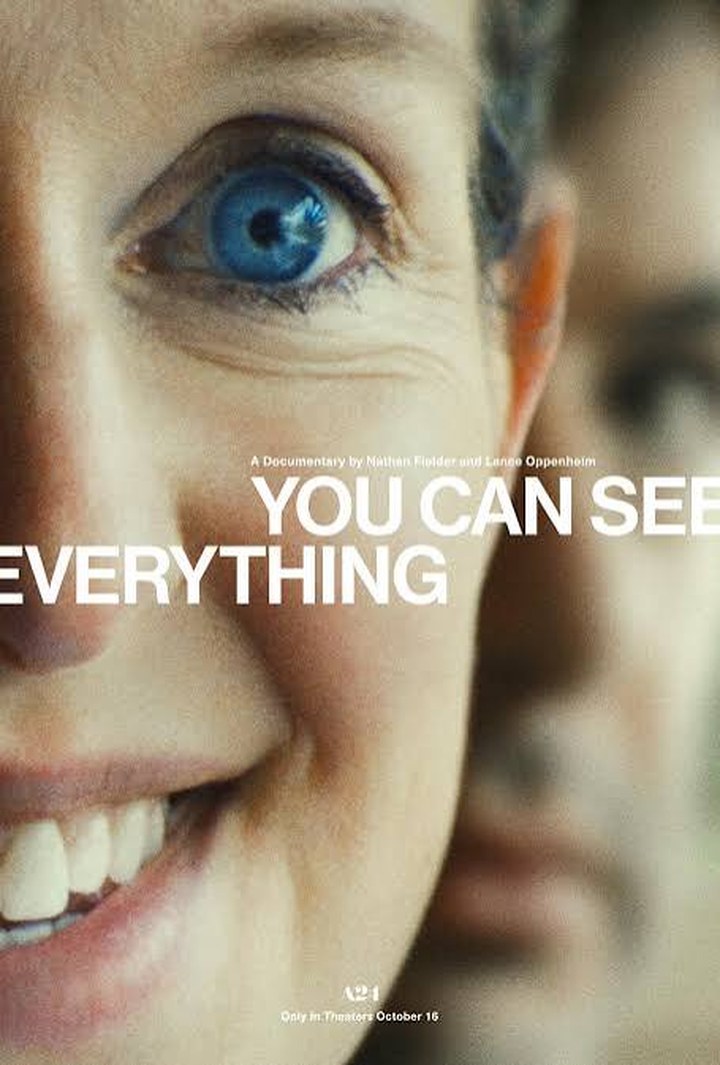
There are few documentaries that manage to be as riveting, uncomfortable, and intellectually fascinating as You Can See Everything. Nathan Fielder takes a deeply personal approach to examining the life of Elizabeth Holmes, the once-celebrated tech revolutionary who became a convicted criminal following the collapse of Theranos. Rather than simply revisiting the scandal and the lies that brought her company down, Fielder explores something far more intriguing: whether Holmes ever fully understood how other people perceived her, how she communicated, and how her grandiose claims about Theranos’ technology sounded to the people around her.
Fielder brings the same distinctive sensibilities that have defined his previous work. His interviewing style is direct, deliberate, and occasionally confrontational. Whether speaking with Holmes or her husband, Billy Evans, he commands the room with an intensity that can make even the simplest exchanges feel deeply uncomfortable. His long, deliberate pauses are particularly effective, creating an almost unbearable silence that seems to invite his subjects to keep talking, often revealing more than they might have intended. It’s an approach that makes the documentary feel less like a traditional interview and more like an unfolding psychological examination.
The film is filled with moments that compel the audience to react, whether through disbelief, discomfort, or those satisfying “aha!” revelations that suddenly reframe what we’ve been watching. Many of the most fascinating developments emerge following the inclusion of Amanda Seyfried, who portrayed a satirical version of Holmes in Hulu’s The Dropout. Seyfried becomes an unexpected but invaluable collaborator in Fielder’s exploration, helping develop ideas and serving as a kind of soft interrogator during one particularly significant sequence. Her presence adds another layer to the film, bridging the public’s perception of Holmes with the person who exists behind that carefully constructed image.
What makes You Can See Everything so compelling is its willingness to sit with ambiguity and discomfort. Fielder isn’t simply interested in recounting what happened at Theranos; he’s interested in the person at the center of it all, the disconnect between self-perception and public perception, and the unsettling possibility that the way someone sees themselves can be radically different from how the rest of the world sees them.
I consider You Can See Everything to be in rarefied air among the best films of the year. It’s an engrossing, often uncomfortable piece of documentary filmmaking that demonstrates just how powerful a carefully constructed conversation can be. Nathan Fielder has once again found a way to turn awkwardness into an investigative tool, producing something that lingers in the mind long after the credits roll.
S-Rank. One of the year’s best.
Final Rank: S
Cinema Ranked is a community series. These are Kris’s own opinions, not Get Dangerous Games’ or the Shadows RPG crew’s.